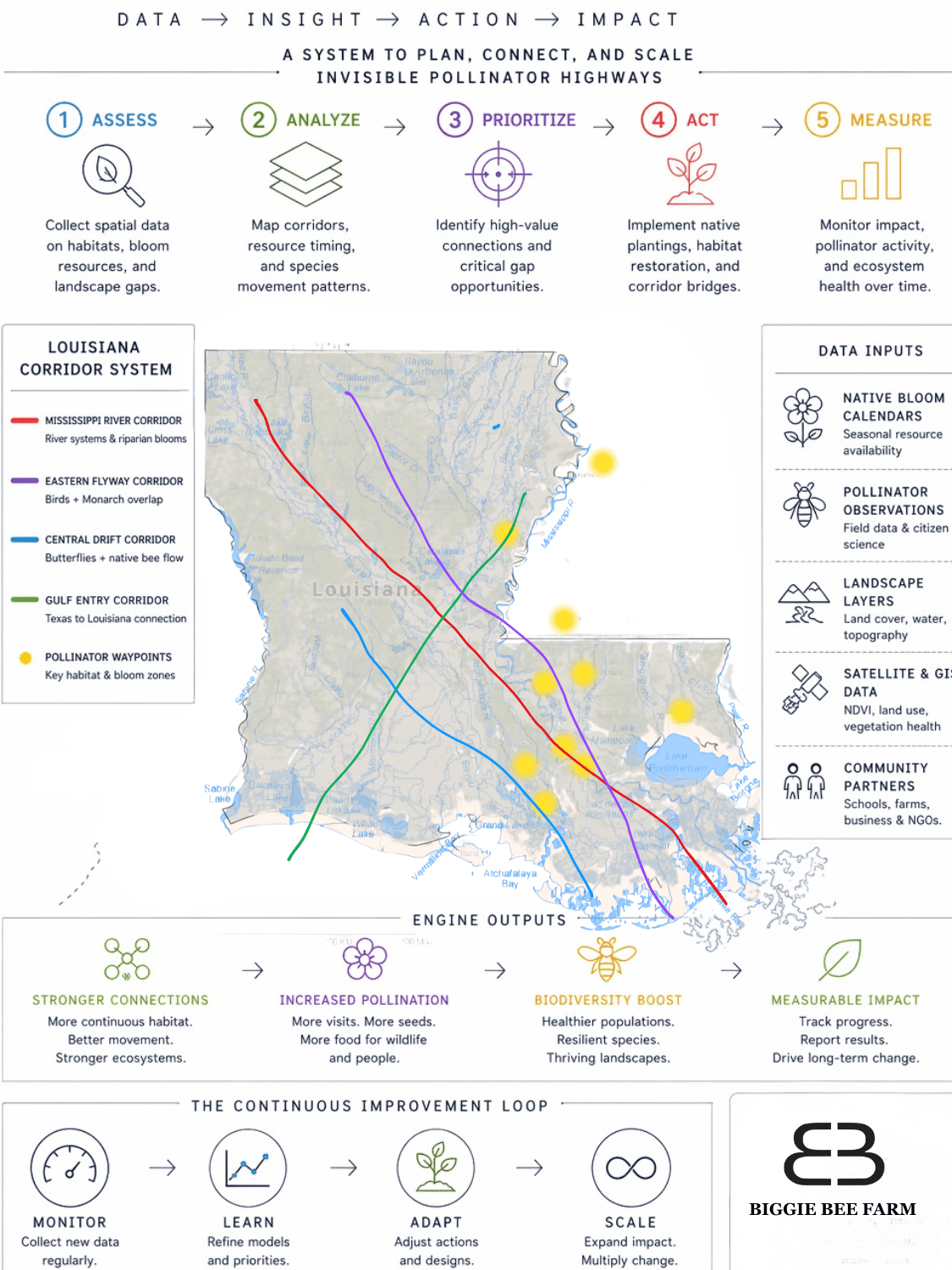
Pollinator Habitat
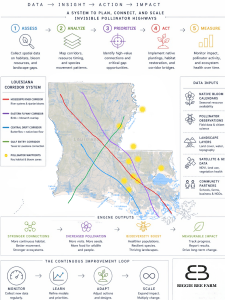
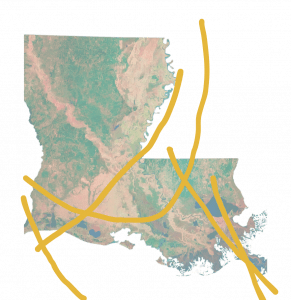
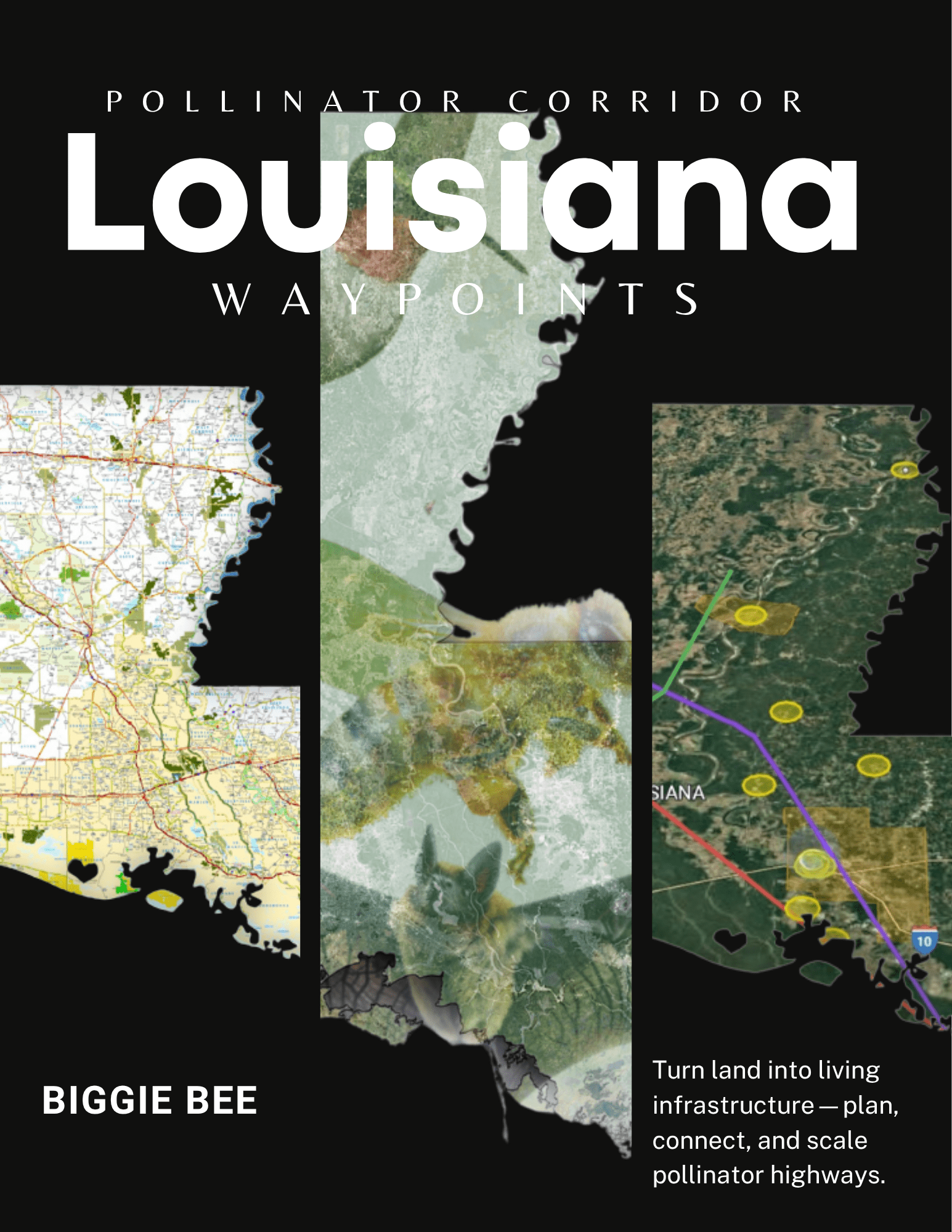
Louisiana Pollinator Corridor
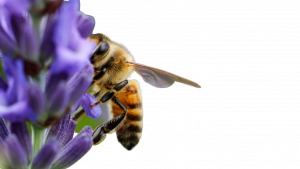
A living network of habitat across farms, neighborhoods, campuses, and community spaces.
Read the post →225Magazine: featuring Biggie Bee Farm Read it
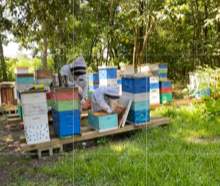
Field Notes from the Apiary
One of the most fascinating parts of beekeeping is seeing how differently colonies perform from place to place.
Two sites may look similar at first glance, but bloom timing, water, surrounding vegetation, and land use can create completely different outcomes.
We share these observations because pollinators are not just part of the story. They help reveal the story the land is already telling.
Teaching kids to appreciate the environment is like teaching them to be good neighbors to the planet. It’s about helping them understand that the Earth is our home and we need to take care of it.
It makes them care: When kids learn about nature, they fall in love with it. This love makes them want to protect animals, trees, and clean water.
It makes them smart: Exploring outside is a fun way to learn about science, like how plants grow and why bugs are important. It also teaches them how to solve problems.
It makes them healthy and happy: Spending time outdoors is good for their bodies and minds. It helps them get exercise, and being in nature can make them feel calm and peaceful.
In short, we teach kids about the environment in hope they grow up to be responsible people who will take care of our future world.
Biggie Bee Farm
A growing resource hub for bloom timing, pollinator habitat, seasonal forage, and practical ecology across Louisiana landscapes.
Pollinators rely on more than one bloom, one season, or one place. This hub brings together field-based observations, practical habitat ideas, and science-forward educational content to help people better understand how pollinators move through the landscape and what truly supports them.
The more time you spend watching pollinators, the more you realize how connected everything is. Bloom timing matters. Habitat spacing matters. Native plants matter. Small landscape decisions matter.
A flowering tree near a parking lot, blackberry along a fence line, a patch of clover in a field, or a native planting beside a building may all be part of the same ecological story.
Louisiana Pollinator Intelligence is our way of organizing that story into something practical, useful, and shareable.
Explore bloom timing, pollinator activity, and seasonal ecological patterns across Louisiana.
View the Map →Follow the season through bloom updates, field observations, and practical habitat insights.
Join the Updates →Learn how small habitat spaces can become meaningful support systems for pollinators.
Read More →Big-picture ideas that explain how habitat, bloom timing, and biodiversity connect across the landscape.
Pollinator Habitat
A living network of habitat across farms, neighborhoods, campuses, and community spaces.
Read the post →Pollinator Habitat
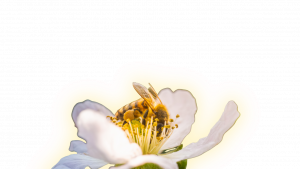
Small habitat spaces that make a big difference for pollinators moving through the season.
Read the post →A closer look at the species and pollinator groups that shape healthy Louisiana habitat systems.
Pollinators that connect entire landscapes through thousands of daily foraging trips.
Read More →The quiet specialists of pollination and an essential part of resilient ecosystems.
Read More →Small pollinators with big presence and strong public engagement value.
Read More →Nighttime ecological support systems that belong in broader habitat conversations.
Read More →Indicators that habitat is becoming more biologically active and diverse.
Read More →Seasonal bloom patterns, honey flow timing, and field-based plant observations across Louisiana.
Seasonal Bloom Reports
A seasonal bloom update tied to pollinator activity, nectar flow, and current observations.
Read the report →Pollinator Plants
One of Louisiana’s most important early spring nectar and pollen sources.
Read the post →Seasonal Bloom Reports
A seasonal look at major nectar sources and how bloom timing shapes colony momentum.
Read the calendar →We are growing Biggie Bee Farm’s pollinator work beyond honeybees alone. That includes exploring waypoint systems that can support bees, native pollinators, hummingbirds, butterflies, beneficial insects, and broader biodiversity across Louisiana landscapes.
These systems are designed to be practical, educational, and deeply tied to the land they live on.
Join our Bloom Report for seasonal updates on what is blooming, which pollinators are active, and what we are seeing across the landscape.
Get the Bloom ReportReal Locations. Real Impact. One hive at a time.
A Question Worth Asking
Most people ask how many hives should go on a property. That matters, but it is not always the first question we ask.
We like to step back and look at bloom timing, forage diversity, site conditions, nearby land use, and whether the landscape can support pollinators well across seasons.
Sometimes adding bees is the right answer. Sometimes improving habitat comes first. The better question often leads to the better result.
Ask About Your PropertyWe use cookies to improve your experience on our site. By using our site, you consent to cookies.
Manage your cookie preferences below:
Essential cookies enable basic functions and are necessary for the proper function of the website.
These cookies are needed for adding comments on this website.
Statistics cookies collect information anonymously. This information helps us understand how visitors use our website.
Google Analytics is a powerful tool that tracks and analyzes website traffic for informed marketing decisions.
Service URL: policies.google.com (opens in a new window)