
The Waggle Dance
Waggle Dance Explained:
How Bees Communicate and Map the Landscape
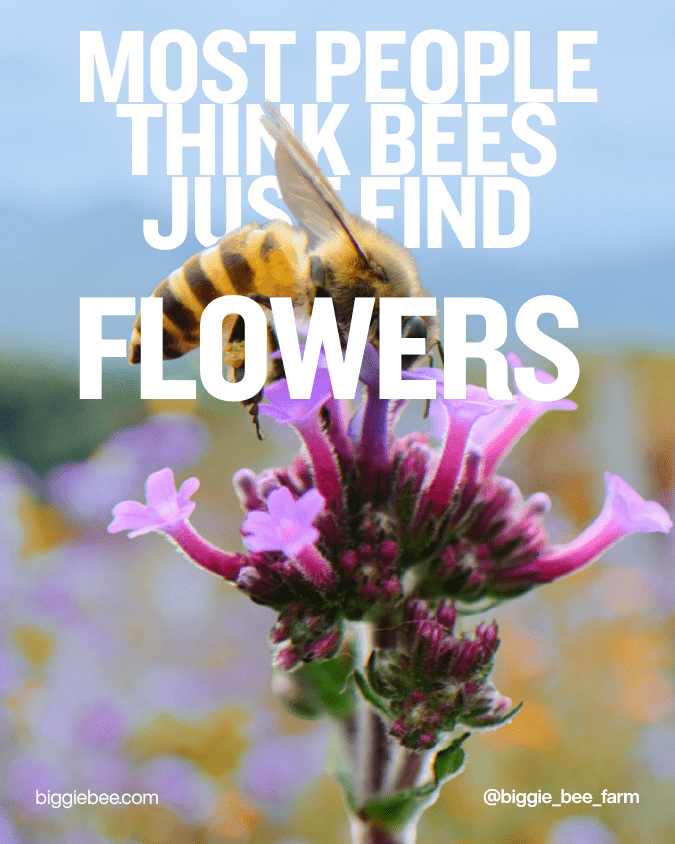
Most people assume bees simply fly around until they find flowers.
They don’t.
Inside every hive is a communication system so precise, it allows thousands of bees to coordinate across miles of landscape—without maps, without technology, and without confusion.
It’s called the waggle dance.
And it changes the way we understand not just bees—but how entire ecosystems function.
What is a waggle dance?
The waggle dance is a behavior performed by a forager bee after she discovers a valuable food source—like blooming wildflowers, crops, or nectar-rich trees.When she returns to the hive, she doesn’t just “tell” other bees where to go.
She shows them.
The dance follows a repeated figure-eight pattern, with a straight “waggle run” in the middle. That movement encodes three key pieces of information:
Direction – communicated by the angle of the waggle relative to the sun
Distance – communicated by the duration of the waggle
Quality – communicated by the intensity and enthusiasm of the movement
In simple terms:
Bees don’t guess where flowers are.
They receive instructions.

Bees use the sun as their compass
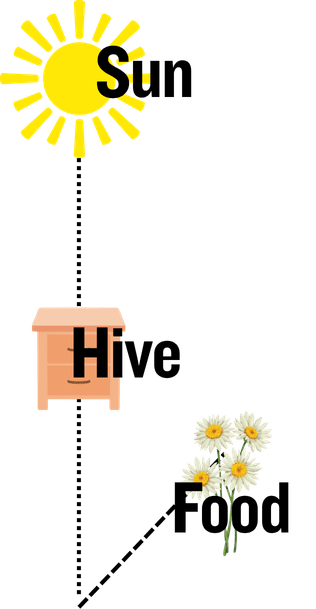
One of the most fascinating parts of the waggle dance is how bees orient themselves using the sun. Inside the dark hive, the vertical direction (straight up) represents the position of the sun outside.
If a bee waggles at:
A straight upward angle → fly toward the sun
60° to the left → fly 60° left of the sun
Downward → fly away from the sun
This means bees are constantly adjusting their communication as the sun moves across the sky.
They’re not just navigating.
They’re updating real-time environmental data. The waggle dance also encodes how far and how worthwhile a resource is.
A longer waggle run means the flowers are farther away
A short, quick waggle means they’re close
A more energetic dance signals higher-quality nectar or pollen
Think of it like this:
Bees are sharing:
Location
Travel time
Resource value
All through movement.
No language. No tech. Just biology
A relatable way to think about it
Imagine walking into work tomorrow……and instead of emails, your coworker performs a short dance that tells you:
exactly where to go
how far it is
and whether it’s worth your time
And somehow, everyone understands perfectly.
That’s the waggle dance.
Efficient. Decentralized. Proven.
Why This Matters for Pollination and Hive Placement
This is where the science becomes practical.
At Biggie Bee Farm, we don’t just place hives—we position them within a communication network.
Every hive becomes a central hub.
Every forager becomes a data collector.
Every dance becomes a decision-making signal for the colony.
This means:
Bees actively map the surrounding landscape
They prioritize the most productive blooms
They adjust in real time as conditions change
So when we install hives near:
native plantings
agricultural crops
or restoration areas
We’re not just adding pollinators.
We’re activating a system.
Bees as Environmental Intelligence
The waggle dance reveals something bigger:
Bees aren’t just reacting to the environment.
They’re interpreting it.
They measure:
bloom availability
resource density
seasonal changes
landscape productivity
And then they communicate those findings across the colony.
In many ways, a hive functions like a living sensor network—constantly collecting and distributing environmental data.
This is why we often say:
Bees are more than pollinators.
They are environmental intelligence in motion.
What This Means for Louisiana Landscapes
Here in Louisiana, where ecosystems shift quickly with season, temperature, and rainfall, this kind of adaptive communication is critical.
From early spring blooms to late-season nectar flows, bees are continuously:
tracking what’s blooming
identifying gaps in forage
and responding to changes in real time
This is exactly what we’re mapping through our pollinator corridor and waypoint systems—understanding how bees move across our region and how we can support stronger, more connected landscapes.