
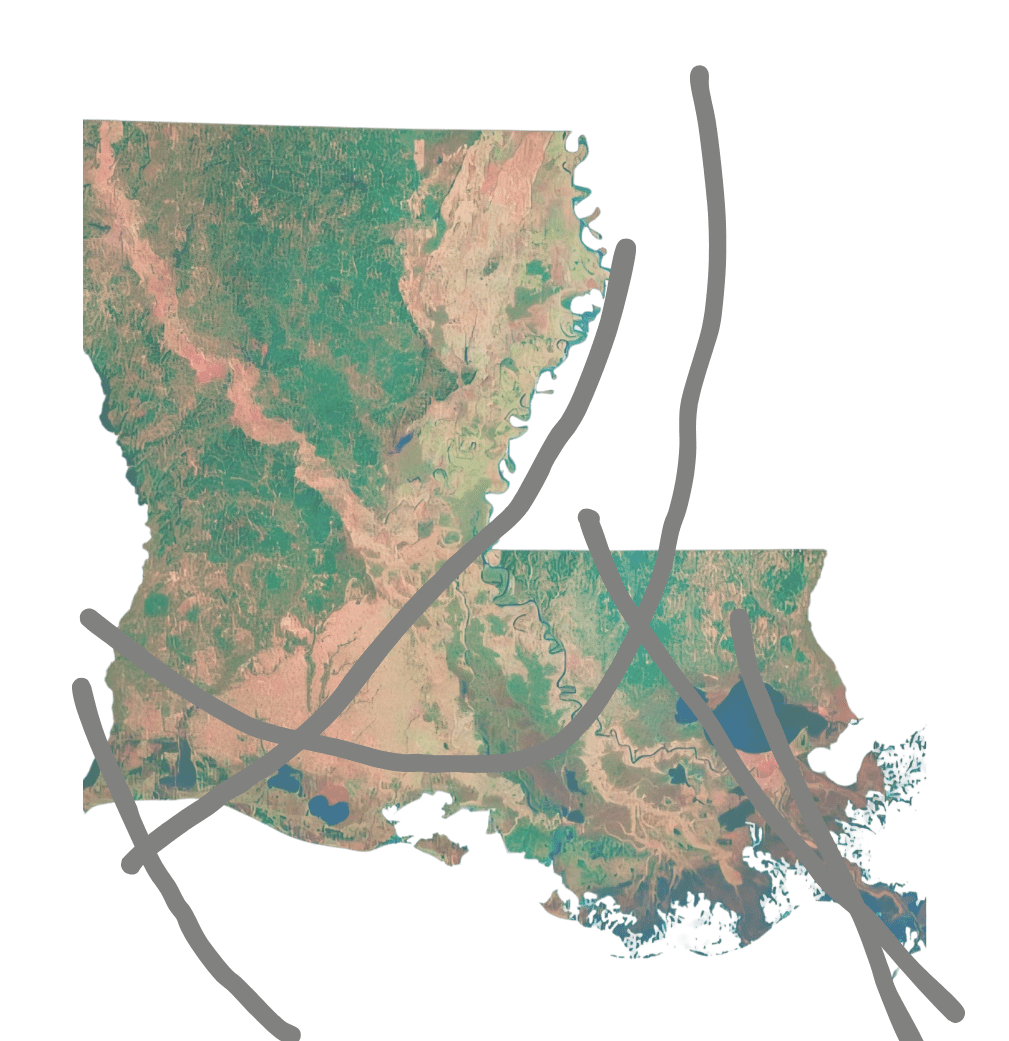
Pollinator Corridors Hidden Highways That Sustain Our Ecosystems
There is a workforce behind every bloom.
Pollinators are often seen in isolated moments. A bee on a flower, a butterfly crossing a field.
These glimpses we get are part of a fascinating system that operates across landscapes, connecting ecosystems in ways that are too rarely visible.
This continuous movement in our environment powers everyday life.
Pollinators travel between plants, habitats, and regions, creating connections that support reproduction, biodiversity, and food production.
In Louisiana, these connections are especially important. The state sits at the intersection of multiple ecological systems, making it a key area for pollinator activity and movement. Something we deeply appreciate learn from and observe at our waypoints.
How Different Pollinators Use Corridors
Not all pollinators interact with corridors in the same way. Each species has its own movement strategy, which determines how it uses the landscape.
A functional system must account for multiple species and the different ways they move.
These pathways are essential to pollinators
This hidden highway connects habitats through our state, allowing pollinators to move between areas where they can feed and reproduce.
A true pollinator corridor is not just a line on a map. It is a continuous system of resources. It is a system of multiple layers. For a corridor to work, it must provide consistent access to nectar, pollen, and habitat across both space and time.
This means that isolated patches of flowers are not enough. Pollinators now need us to help bridge the sequences of resources to support movement along their highways without interruption. When these habitat sequences are broken, the corridor becomes fragmented, and movement becomes less reliable.
Effective corridors should be built on three key components:
- Continuity: resources must be available across the entire pathway
- Diversity: a variety of plants supports different pollinator species
- Timing: blooms must align with pollinator activity throughout the season
When these elements are in place, pollinator movement becomes efficient and predictable. When they are missing, movement becomes limited, and the system begins to weaken.
Understanding this distinction is important. It shifts the focus from simply adding plants to building functional systems that support pollinators at scale.
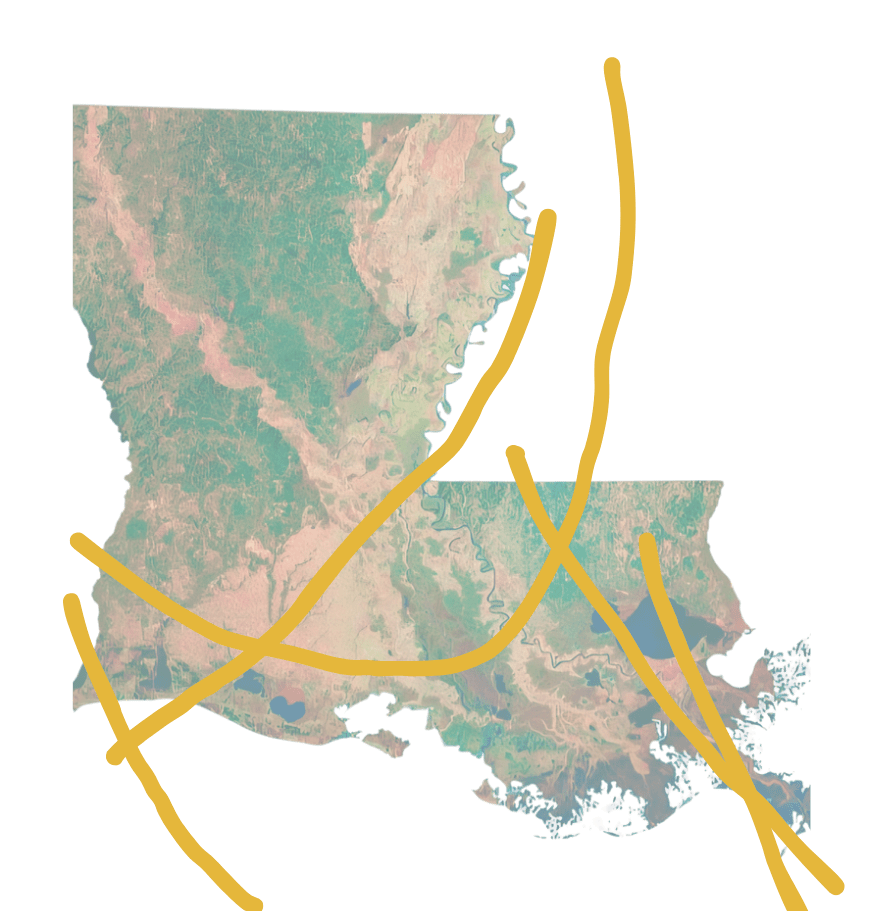
Convergence Zone for Pollinators
Not all regions play the same role in pollinator movement. Louisiana stands out because it sits at the intersection of multiple ecological systems, making it a natural convergence zone for pollinators. This should certainly be more valued than it actually is.
Pollinators moving through the southern United States encounter Louisiana as both a destination and a transition point. Inland agricultural systems, coastal environments, and migratory pathways all overlap here.
This creates a landscape where pollinators are not only present, but actively moving, mixing, and adapting.
In Louisiana, pollinators may:
- Move through inland corridors that support agriculture
- Shift toward coastal zones to access concentrated resources
- Encounter conditions that influence long-distance movement decisions
This overlap makes Louisiana one of the most important regions for maintaining pollinator connectivity. What happens here affects not only local ecosystems, but broader movement patterns across multiple states and regions.
The Three Types of Pollinator Corridors
Pollinator movement across Louisiana can be understood through three primary types of corridors. Each serves a different function and supports different species and behaviors.
Inland Corridors
These corridors form the backbone of pollination. They follow agricultural areas, natural vegetation lines, and unmanaged land edges. Bees and other local pollinators depend heavily on these pathways for consistent access to resources.
Coastal Corridors
Coastal drift zones provide critical support for pollinators as they approach large environmental boundaries. These areas allow pollinators to feed, rest, and adjust movement before making more demanding transitions.
Transitional and High-Risk Routes
Some pollinators attempt more extreme movements under specific conditions. These routes are less common but play an important role in connecting distant ecosystems.
Together, these corridors create a layered system that supports both local and long-distance movement.
When pollinator corridors are disrupted, the effects are not always immediate, but they are significant over time. Record multiple year losses reported all around the world, unpredictable grow season changes, etc.
Habitat fragmentation, development, and changes in land use can create gaps in the system. These gaps make it harder for pollinators to move between resource areas.
As a result:
- Pollinator populations may decline
- Movement becomes less consistent
- Pollination efficiency decreases
This impacts not only wild ecosystems, but also agricultural systems that depend on reliable pollination.
When corridors weaken, the system shifts from connected to fragmented. And once fragmentation reaches a certain point, recovery becomes more difficult.
Pollinator corridors support two critical outcomes: agricultural productivity and ecological stability.
In agriculture, pollinators are responsible for improving crop yields, fruit quality, and consistency. Without strong corridors, these benefits become less reliable.
In natural ecosystems, corridors allow for species movement, genetic exchange, and population stability. This helps maintain biodiversity and resilience over time.
These two systems—agriculture and biodiversity—are closely connected. Strong pollinator systems support both simultaneously.
Investing in corridors is not just about supporting pollinators. It is about supporting the systems that depend on them.
Building Systems That Support Movement
Pollinator corridors are the hidden infrastructure that connects ecosystems across Louisiana. They allow pollinators to move, adapt, and sustain the systems that depend on them.
Understanding these corridors shifts the focus from isolated habitats to connected systems. It reveals that pollinator health is not determined by one location, but by the strength of the network as a whole.
When corridors are strong, ecosystems are more productive, more resilient, and more capable of supporting life at scale.
Biggie Bee works to build and support pollinator systems across Louisiana by strengthening the corridors that make movement possible.
If you’re looking to create measurable environmental impact, sustaining pollinator pathways is one of the most effective places to start we believe.
This isn’t a donation. It’s overlooked infrastructure we are invested in and have built partnerships and clients on.